
Last Updated: January 2026 | Reading Time: 8 minutes

Are you dreaming of discovering a destination where ancient civilizations meet breathtaking natural wonders? Ethiopia, the birthplace of coffee and humanity, offers travelers an extraordinary journey through time, culture, and some of Africa’s most dramatic landscapes. From the rock-hewn churches of Lalibela to the otherworldly Danakil Depression, Ethiopia promises adventures you’ll treasure forever.
Why Visit Ethiopia in 2026
Ethiopia stands apart as one of Africa’s most unique travel destinations. Unlike most African countries, Ethiopia was never colonized, preserving its rich cultural heritage and ancient traditions for over 3,000 years. This East African gem is home to nine UNESCO World Heritage Sites, more than any other African nation.
What makes Ethiopia special:
- Ancient churches carved entirely from solid rock
- The only country with its own alphabet and calendar
- Birthplace of Arabica coffee
- Home to 13 months of sunshine (yes, really!)
- Africa’s oldest independent nation
- Diverse landscapes from volcanic deserts to highland mountains
Planning your Ethiopian adventure requires proper preparation. Start by securing comprehensive travel insurance to cover medical emergencies, trip cancellations, and adventure activities. Ethiopia’s remote regions make insurance essential for peace of mind.
Top Destinations and Stunning Landscapes
Lalibela: The New Jerusalem
Lalibela is Ethiopia’s crown jewel and a pilgrimage site that rivals Jerusalem’s significance for Ethiopian Orthodox Christians. Carved entirely from solid volcanic rock in the 12th century, these eleven monolithic churches are architectural marvels that defy explanation.
Must-see churches:
- Bet Giyorgis (Church of St. George): The most famous, carved in the shape of a cross
- Bet Medhane Alem: The largest rock-hewn church in the world
- Bet Maryam: Features stunning frescoes and detailed carvings
Visit during Ethiopian Christmas (January 7th) or Timkat (Ethiopian Epiphany in January) to witness thousands of white-robed pilgrims in spiritual ceremonies. Book your accommodation in Lalibela early, as hotels fill quickly during religious festivals.
Travel tip: Hire a knowledgeable local guide to fully appreciate the historical and spiritual significance of these magnificent structures.
Simien Mountains National Park
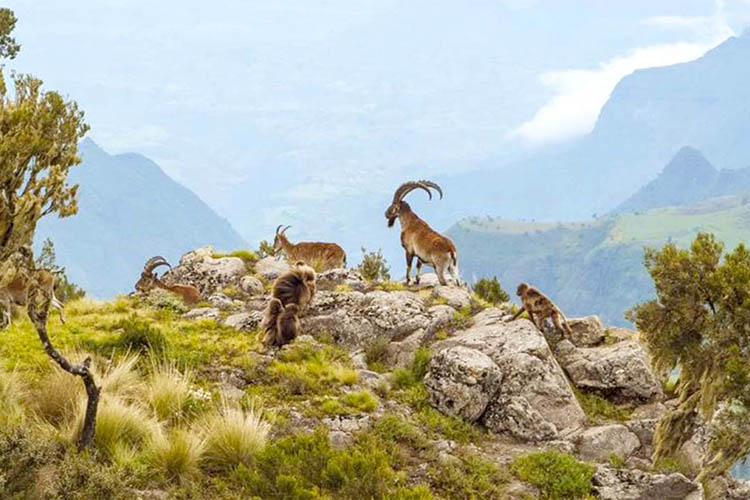
Often called the “Roof of Africa,” the Simien Mountains offer some of the continent’s most spectacular trekking opportunities. This UNESCO World Heritage Site features dramatic landscapes with jagged peaks, deep valleys, and sheer cliffs dropping over 1,500 meters.
Wildlife highlights:
- Endemic Gelada baboons (found nowhere else on Earth)
- Ethiopian wolves (the world’s rarest canid)
- Walia ibex clinging to impossible cliff faces
- Over 130 bird species including the magnificent Lammergeier
Multi-day treks through the Simien Mountains range from moderate to challenging. Pack your essential travel gear including quality hiking boots, layers for changing weather, and a good sleeping bag for cold mountain nights.
Danakil Depression: Earth’s Hottest Place
The Danakil Depression is one of the most extreme environments on Earth, sitting 125 meters below sea level with temperatures regularly exceeding 50°C (122°F). This surreal landscape looks like another planet, with bubbling lava lakes, sulfur springs in neon yellow and green, and vast salt flats.
Key attractions:
- Erta Ale: Active lava lake glowing orange at night
- Dallol: Multicolored hydrothermal fields
- Salt caravans: Traditional salt miners working ancient routes
- Sunset over salt flats: Otherworldly photography opportunities
This challenging expedition requires proper planning. Stay connected with an international eSIM to share your incredible photos and stay in touch with family, as traditional SIM cards often have limited coverage in remote areas.
Aksum: Ancient Kingdom
Aksum was once the capital of a powerful kingdom that rivaled Rome and Persia. Today, this archaeological wonder features towering stone obelisks, underground tombs, and the legendary Church of St. Mary of Zion, believed by Ethiopians to house the Ark of the Covenant.
Don’t miss:
- The Great Stele (24 meters tall)
- Queen of Sheba’s palace ruins
- Ancient inscription stones
- Archaeological museum
Gondar: Ethiopia’s Camelot
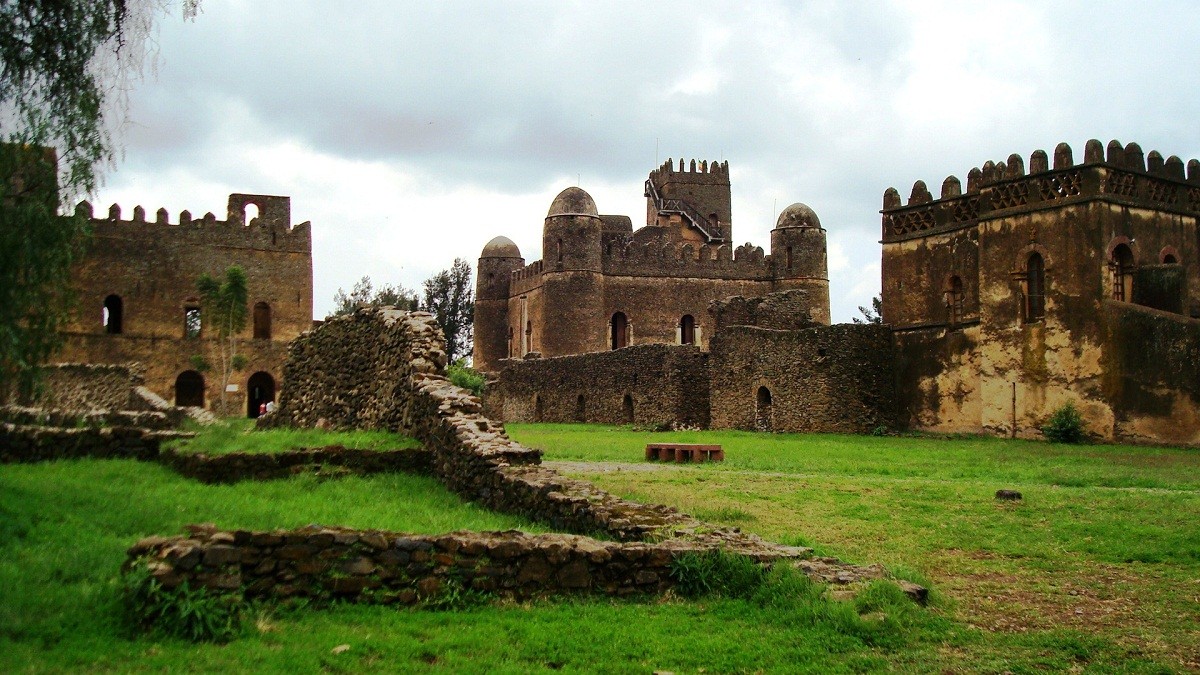
Known as the “Camelot of Africa,” Gondar served as Ethiopia’s capital from the 17th to 19th centuries. The Royal Enclosure contains six castles built by various emperors, showcasing unique architectural fusion of European, Arab, and Indian influences.
Lake Tana and Blue Nile Falls
Lake Tana, Ethiopia’s largest lake, is dotted with 37 islands housing ancient monasteries filled with priceless religious treasures and colorful murals. The Blue Nile River originates here, flowing to the spectacular Blue Nile Falls (locally called Tis Issat – “smoking water”).
Island monastery highlights:
- Ura Kidane Mihret: Best preserved murals
- Azwa Maryam: Stunning lake views
- Kibran Gabriel: Most sacred (men only)
Boat trips across Lake Tana offer peaceful respite between Ethiopia’s more intense destinations. Book your lakeside accommodation in Bahir Dar, the charming city on Lake Tana’s shores.
Essential Travel Planning

Getting There and Around
International flights: Addis Ababa’s Bole International Airport connects to major cities worldwide. Ethiopian Airlines offers extensive international and domestic routes with competitive fares.
Domestic travel:
- Flights between major tourist sites (quickest option)
- Private drivers for flexibility (book through reliable tour operators)
- Public buses (budget-friendly but time-consuming)
- Avoid rainy season travel (June-September) for better road conditions
Ensure you have comprehensive travel insurance covering medical evacuation, as healthcare facilities outside Addis Ababa can be basic.
Visa Requirements
Most nationalities can obtain an e-visa online before travel or visa-on-arrival at Addis Ababa airport. The process is straightforward:
- Visit Ethiopia’s e-visa portal
- Complete application (takes 10 minutes)
- Pay $52 for 30-day tourist visa
- Receive e-visa via email (usually within 3 business days)
Staying Connected

Ethiopia’s mobile network coverage is improving but remains limited in remote areas. An international eSIM is essential for reliable connectivity. Digital eSIMs activate instantly and offer better rates than local SIM cards, plus you can keep your home number active simultaneously.
Essential Travel Kit
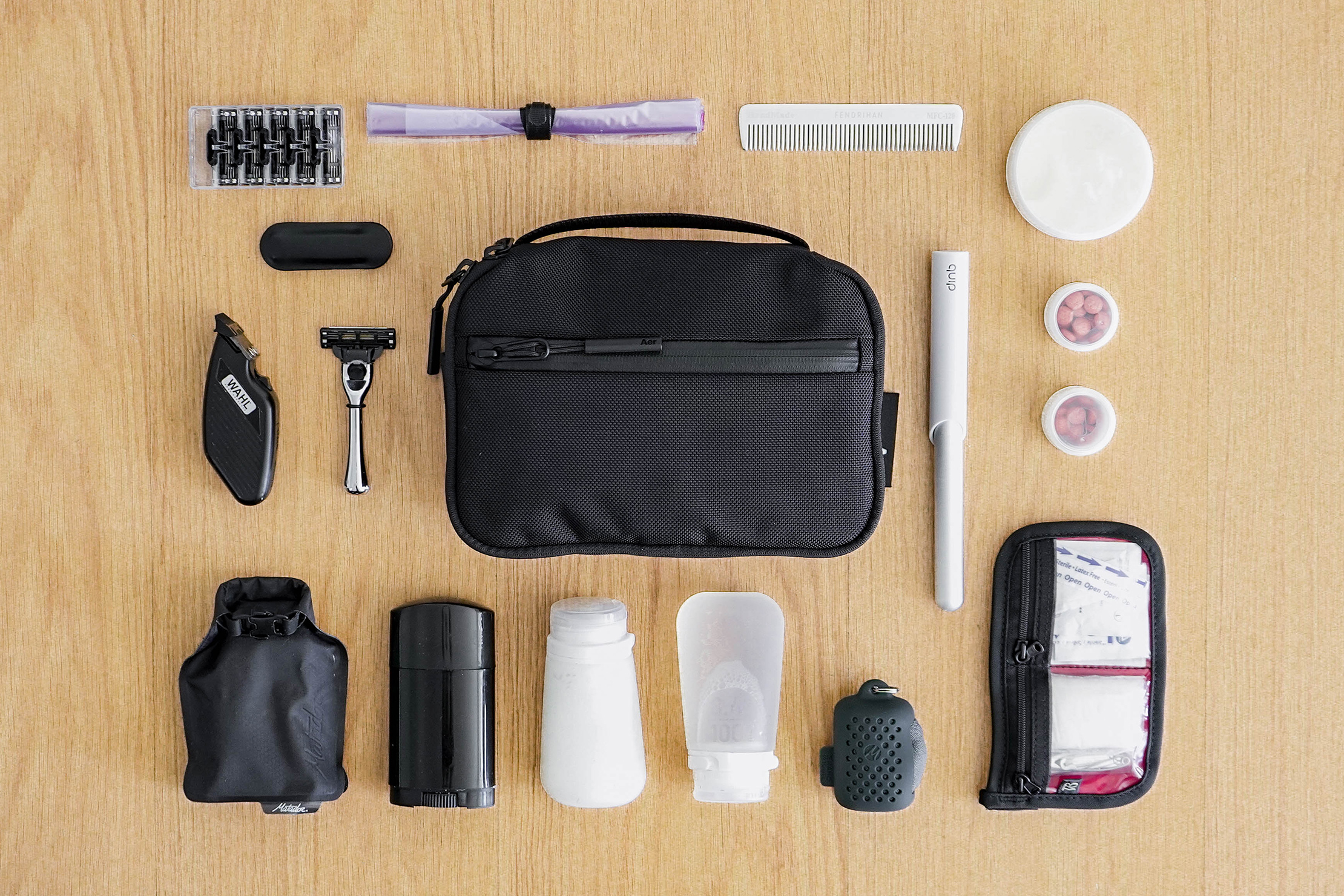
Pack your comprehensive travel kit with these Ethiopia-specific items:
- High-SPF sunscreen (especially for Danakil Depression)
- Quality hiking boots for mountain treks
- Warm layers (highland temperatures drop dramatically at night)
- Water purification tablets or filter bottle
- Modest clothing respecting local culture
- Universal power adapter (Ethiopia uses European-style plugs)
- First aid kit including altitude sickness medication
Budget and Costs
Ethiopia offers excellent value for money compared to other African destinations. Here’s a realistic daily budget breakdown:
Budget traveler ($30-50/day):
- Guesthouse accommodation: $10-20
- Local restaurants: $5-10
- Local buses: $2-5
- Entrance fees: $5-10
Mid-range traveler ($80-150/day):
- Comfortable hotel: $40-70
- Mix of local and tourist restaurants: $15-25
- Private driver or domestic flights: $20-40
- Guided tours: $15-30
Luxury traveler ($200+/day):
- High-end lodges: $100-250
- Fine dining: $30-50
- Private tours and flights: $60-100
- Premium experiences: $50+
Money-saving tips:
- Travel during shoulder season (March-May, October-November)
- Book accommodation in advance for better rates
- Eat at local restaurants for authentic, affordable meals
- Join small group tours to split costs
- Negotiate prices respectfully in markets
Best Time to Visit Ethiopia
Dry season (October-March): Best overall time with clear skies, comfortable temperatures, and optimal conditions for trekking and photography. Peak tourist season means higher prices and more crowds.
Religious festivals:
- Timkat (January): Ethiopian Epiphany celebration
- Ethiopian Christmas (January 7)
- Meskel (September): Finding of the True Cross
Rainy season (June-September): Lower prices and fewer tourists, but heavy rains make rural travel challenging. The highlands are lush and green, though trekking is difficult.
Danakil Depression: Visit October-March when temperatures are “only” 35-45°C instead of 50°C+.
Safety and Health Tips
Ethiopia is generally safe for tourists, but take sensible precautions:
Health preparations:
- Get required vaccinations (Yellow Fever certificate mandatory)
- Take malaria prophylaxis if visiting lowland areas
- Comprehensive travel insurance is non-negotiable
- Drink only bottled or purified water
- Avoid altitude sickness by ascending gradually in highlands
Safety considerations:
- Avoid border regions with Eritrea, Somalia, and South Sudan
- Check current travel advisories before booking
- Hire reputable guides for remote areas
- Keep valuables secure and avoid displaying wealth
- Women should dress modestly (covered shoulders and knees)
Emergency numbers:
- Police: 991
- Ambulance: 907
- Fire: 939
Cultural Experiences Not to Miss
Traditional Coffee Ceremony
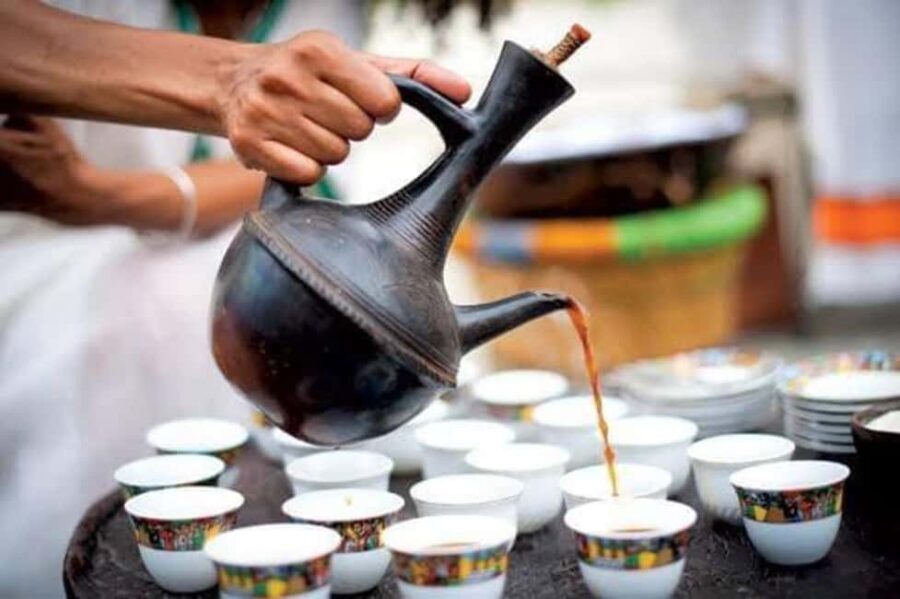
Ethiopia is the birthplace of coffee, and the traditional coffee ceremony is a social highlight. Women roast green beans over charcoal, grind them by hand, and brew in a traditional clay pot called a jebena. This ceremonial process takes over an hour and represents hospitality and community.
Ethiopian Cuisine

Ethiopian food is a feast for the senses. Meals are served on injera (spongy sourdough flatbread) with various stews and vegetables:
- Doro Wat: Spicy chicken stew (national dish)
- Kitfo: Minced raw beef with spices
- Shiro: Chickpea flour stew (vegetarian favorite)
- Teff: Ancient superfood grain used for injera
Most restaurants offer vegetarian/vegan options, as Orthodox Christians fast (eating vegan) over 200 days yearly.
Local Markets
Experience authentic Ethiopian life at bustling markets:
- Merkato (Addis Ababa): Africa’s largest open-air market
- Dorze market: Traditional weaving demonstrations
- Bati market: Weekly camel market
Practical Information
Currency: Ethiopian Birr (ETB). Exchange at banks or official bureaus. ATMs available in cities but unreliable in rural areas. Carry sufficient cash.
Language: Amharic is the official language, but English is widely spoken in tourist areas. Learn basic Amharic phrases for genuine cultural connection.
Electricity: 220V, European-style plugs. Pack a universal adapter in your travel kit.
Time zone: Ethiopia follows its own unique time system (12-hour clock starting at dawn) and calendar (13 months).
Accommodation: Book your hotels and lodges in advance, especially during peak season and festivals. Options range from budget guesthouses to luxury lodges.
Start Your Ethiopian Adventure Today
Ethiopia offers travelers an experience unlike anywhere else on Earth. From the spiritual power of Lalibela’s rock-hewn churches to the alien landscapes of the Danakil Depression, from the dramatic peaks of the Simien Mountains to the ancient mysteries of Aksum, Ethiopia will challenge your perceptions and capture your heart.
Don’t let logistics hold you back from this journey of a lifetime. Secure your travel insurance, book your accommodation, grab your international eSIM, pack your essential travel gear, and prepare for an adventure through one of Africa’s most extraordinary countries.
Ready to explore Ethiopia? Start planning your trip today and discover why this ancient land continues to captivate travelers from around the world.
Have you visited Ethiopia? Share your experiences and travel tips in the comments below! For more African travel guides, subscribe to our newsletter and follow us on Instagram @ujamaah
PIN THIS POST for your future Ethiopian adventure!
Frequently Asked Questions
Is Ethiopia safe for tourists? Yes, Ethiopia is generally safe for tourists in main tourist areas. Avoid border regions and check current travel advisories before your trip.
Do I need a visa for Ethiopia? Most nationalities can get an e-visa online or visa-on-arrival. The tourist visa costs $52 for 30 days.
What vaccinations do I need for Ethiopia? Yellow Fever vaccination is mandatory. Recommended: Hepatitis A & B, Typhoid, Tetanus, and malaria prophylaxis for lowland areas.
How many days do I need to visit Ethiopia? Minimum 7-10 days for main highlights. Ideal trip: 14-21 days to explore major sites without rushing.
Is Ethiopia expensive to visit? Ethiopia offers excellent value. Budget travelers can manage on $30-50/day, while mid-range travelers should budget $80-150/day.
What’s the best time to visit Ethiopia? October to March offers the best weather with dry conditions ideal for trekking and sightseeing.