

Traveling to Africa is an adventure of a lifetime, but staying connected during your journey requires some planning. Whether you’re embarking on a safari in Tanzania, exploring the bustling markets of Marrakech, or conducting business in Lagos, reliable mobile connectivity is essential for navigation, communication, and sharing your experiences. This comprehensive guide will help you understand your options and make the best choice for staying connected across the African continent.
Understanding Africa’s Mobile Landscape
Africa’s telecommunications infrastructure has undergone a remarkable transformation over the past decade. Major cities across the continent now boast reliable 4G networks, with some metropolitan areas even offering 5G connectivity. However, the quality and availability of service can vary dramatically depending on your location.
Urban centers like Johannesburg, Nairobi, Cairo, and Casablanca offer connectivity that rivals major European and North American cities. You’ll find fast, stable connections that support video calls, streaming, and seamless navigation. The story changes considerably when you venture into rural areas, national parks, or remote regions where coverage can be spotty or non-existent.
The continent spans diverse terrain from dense rainforests to vast deserts, which naturally affects network coverage. Coastal regions and major highways typically maintain good connectivity, while mountain ranges and desert areas may have significant coverage gaps. Understanding these variations helps you plan accordingly and set realistic expectations for your connectivity throughout your trip.
The Problem with Traditional Roaming
If you’ve ever received a phone bill after international travel, you know how quickly roaming charges can accumulate. Traditional international roaming through your home carrier remains one of the most expensive ways to stay connected while traveling in Africa.
Most major carriers charge between ten to fifteen dollars per day for international roaming packages. While this might seem reasonable for a weekend trip, these costs become prohibitive for longer journeys. A three-week African adventure could cost you over three hundred dollars just for basic connectivity, and that’s before considering any overage charges.
Beyond the financial aspect, traditional roaming often comes with data caps, reduced speeds, and limited coverage. Your home carrier partners with local networks, which means you’re dependent on those partnership agreements. You might find yourself without service in areas where local residents have perfect connectivity simply because your carrier doesn’t have the right partnerships in place.
The hassle of managing roaming settings, dealing with unexpected charges, and troubleshooting connection issues while trying to enjoy your vacation makes traditional roaming an increasingly obsolete option for savvy travelers.
The eSIM Revolution for African Travel
The emergence of eSIM technology has fundamentally changed how travelers stay connected abroad. An eSIM, or embedded SIM, is a digital SIM card built into your smartphone that eliminates the need for physical SIM cards altogether. This technology represents a game-changing solution for international travelers, especially those exploring multiple African countries.
Instead of hunting for SIM card vendors at each airport or dealing with language barriers while trying to activate service, you can purchase and install an eSIM from the comfort of your home before you even depart. The entire process takes minutes and requires nothing more than an internet connection and a compatible smartphone.
The convenience extends far beyond the initial setup. With an eSIM, you can maintain your home number for important calls and messages while using your travel data plan for everything else. There’s no need to inform everyone of a temporary number or worry about missing important communications from home.
For travelers visiting multiple African countries, eSIMs offer unparalleled flexibility. Rather than purchasing a new physical SIM card each time you cross a border, you can simply switch between regional plans or use a multi-country package that covers your entire itinerary. This seamless approach means you stay connected without interruption as you move from country to country.
Why Airalo Stands Out for African Travel

When it comes to eSIM providers for African travel, Airalo has established itself as the premier choice for international travelers. The platform offers comprehensive coverage across Africa with plans specifically designed for the continent’s unique connectivity challenges.
What makes Airalo particularly valuable is its extensive network of partnerships with local carriers across Africa. This means you’re not locked into a single network with potential coverage gaps. Instead, you benefit from connectivity through multiple carriers, ensuring the best possible service regardless of your location on the continent.
The pricing structure is transparent and competitive. You can choose from data-only plans ranging from one gigabyte for short trips to twenty gigabytes or more for extended stays or data-intensive activities. Plans are available for individual countries if you’re staying in one location, or you can opt for regional packages that cover multiple African nations.
Installation is remarkably straightforward. After purchasing your plan through Airalo’s website or mobile app, you receive a QR code via email. Simply scan this code with your phone’s camera, and your eSIM installs automatically. The entire process typically takes less than five minutes, and you can complete it before leaving home or immediately upon landing in Africa.
Checking eSIM Compatibility
Before purchasing an eSIM, you need to verify that your smartphone supports this technology. Most modern smartphones released after 2018 include eSIM capability, but it’s essential to confirm before your trip.
iPhones from the XS series onward support eSIM technology. This includes the XS, XS Max, XR, and all subsequent models including the iPhone 11, 12, 13, 14, and 15 series. If you have a newer iPhone, you’re almost certainly equipped for eSIM use.
For Android users, compatibility varies by manufacturer and model. Google Pixel phones from the Pixel 3 onward support eSIMs. Samsung Galaxy phones starting with the S20 series and beyond include eSIM functionality. Many newer devices from Huawei, Motorola, and other manufacturers also support the technology.
You can easily check your phone’s compatibility by going to your settings menu. On iPhones, navigate to Settings, then Cellular, and look for an option to “Add Cellular Plan” or “Add eSIM.” On Android devices, go to Settings, then Network & Internet or Connections, and look for SIM card manager or SIM settings. If you see options for adding an eSIM or digital SIM, your device is compatible.
It’s worth noting that some phones sold in certain regions may have eSIM functionality disabled. If you’re unsure, check with your phone manufacturer or visit Airalo’s compatibility checker to verify your specific device model.
Setting Up Your eSIM Before Departure

One of the greatest advantages of eSIM technology is the ability to complete your entire setup before leaving home. This preparation ensures you have connectivity the moment you land in Africa, allowing you to order a ride-share, message your accommodation, or navigate to your destination without delay.
Start by visiting Airalo and browsing their African plans. You’ll find options for individual countries and regional packages. Consider your itinerary carefully when selecting a plan. If you’re visiting multiple countries, a regional package offers better value and eliminates the need to purchase separate plans for each destination.
Once you’ve selected your plan, the purchase process is quick and secure. You’ll receive an email containing your eSIM QR code and installation instructions within minutes of completing your purchase. Don’t wait until you’re at the airport to install your eSIM. Take care of this step while you’re still at home with reliable WiFi connectivity.
Installation involves scanning the QR code with your phone’s camera. Your device will prompt you through the remaining steps, which typically include naming your plan (something like “Africa Travel Data”) and selecting whether to use it as your primary line or secondary line for data. Since you’ll want to keep your home number for calls and texts, set the eSIM as your data line.
After installation, you can toggle your eSIM on or off in your phone settings. Keep it off until you arrive in Africa to avoid any premature activation. Most plans activate when they first connect to a network, so waiting until arrival ensures you don’t waste any of your plan duration.
Managing Data While Traveling
Even with an affordable eSIM plan, managing your data usage wisely helps ensure you stay connected throughout your entire trip without running out or needing to purchase additional data at premium prices.
WiFi is widely available in African cities, and taking advantage of these free connections for data-intensive activities preserves your mobile data for when you need it most. Hotels, cafes, restaurants, and many tourist attractions offer WiFi access. Download maps, backup photos, and stream entertainment while connected to WiFi rather than using your mobile data.
Download offline content before heading out for the day. Google Maps allows you to download entire city maps for offline use. Spotify, Netflix, and other entertainment apps offer offline download features. Translation apps with offline language packs are particularly valuable in regions where English isn’t widely spoken.
Adjust your phone settings to optimize data usage. Disable automatic app updates and background app refresh for applications you don’t need to update constantly. Many streaming services have settings for reduced data usage that maintain good quality while consuming less bandwidth. Turn off automatic photo and video backups to cloud services while on mobile data.
Monitor your usage regularly through your phone’s settings or the Airalo app. This awareness helps you pace your consumption and avoid surprises. Most eSIM plans send notifications when you’re approaching your data limit, giving you time to adjust your usage or purchase additional data if needed.
Making Calls and Sending Messages

While most eSIM plans, including those from Airalo, are data-only, this doesn’t mean you can’t make calls or send messages. The key is leveraging internet-based communication apps that work over your data connection.
WhatsApp is absolutely essential for travel in Africa. The platform dominates communication across the continent, with individuals, businesses, tour operators, and even government services using it as their primary communication channel. You’ll find that hotels confirm bookings via WhatsApp, tour guides coordinate through WhatsApp, and even restaurants take reservations through the app.
Install WhatsApp before your trip and ensure it’s connected to your home phone number. Once you have data connectivity through your eSIM, WhatsApp works seamlessly for messages, voice calls, and video calls. The voice and video quality over data is excellent, often superior to traditional phone calls, and it’s all included in your data plan with no per-minute charges.
FaceTime works perfectly for iPhone users communicating with other Apple device users. The integration with your existing contact list makes it effortless to stay in touch with friends and family back home. For Android users or cross-platform communication, apps like Skype, Telegram, or Signal offer similar functionality.
If you need to make traditional phone calls to local numbers in Africa, consider apps like Skype that offer paid calling credits. The rates are typically far more affordable than international calling rates, and the calls use your data connection rather than requiring a traditional cellular plan with calling minutes.
WiFi and Connectivity Options
While your eSIM provides mobile connectivity, understanding WiFi availability across Africa helps you optimize your internet usage and stay connected even in areas with limited mobile coverage.
Hotels across Africa increasingly offer WiFi as a standard amenity, though the quality varies significantly by establishment. Upscale international hotel chains typically provide fast, reliable connections throughout their properties. Mid-range hotels usually offer WiFi in common areas and guest rooms, though speeds may be slower during peak usage times. Budget accommodations might have limited WiFi access, often restricted to lobby areas with variable reliability.
Cafes and restaurants in major cities have embraced the global trend of offering free WiFi to customers. Coffee shops, in particular, often provide reliable connections that work well for catching up on emails, uploading photos, or video calling home. Some establishments require passwords, which they’ll happily provide when you order, while others have open networks.
Airports across Africa have significantly improved their WiFi offerings in recent years. Major international airports in Johannesburg, Nairobi, Cairo, and other hub cities provide free WiFi, though registration with an email address or phone number is usually required. Be prepared for slower speeds during busy travel periods when many passengers are competing for bandwidth.
Coworking spaces have proliferated in African cities, offering excellent WiFi for digital nomads and business travelers. If you need reliable, fast internet for work, these spaces provide professional environments with backup power and premium connectivity for reasonable daily or hourly rates.
When using public WiFi, security should be a primary concern. Avoid accessing sensitive information, making financial transactions, or entering passwords on unsecured networks. Consider using a VPN service to encrypt your connection and protect your data when using public WiFi. Many VPN apps work seamlessly over your eSIM data connection as well, providing security wherever you connect.
Regional Considerations Across Africa
Africa’s vast size and diversity mean that connectivity experiences can vary dramatically from region to region. Understanding these differences helps you set appropriate expectations and plan accordingly.
North Africa, including Morocco, Egypt, Tunisia, and Algeria, generally offers excellent mobile infrastructure in cities and tourist areas. Coverage along major highways is reliable, making road trips between cities manageable. However, desert regions can have significant coverage gaps. If you’re planning desert excursions or remote oases visits, inform someone of your itinerary and don’t rely solely on mobile connectivity for navigation or emergencies.
East Africa, encompassing Kenya, Tanzania, Uganda, Rwanda, and Ethiopia, has made tremendous strides in mobile connectivity. Major cities and tourist circuits, including safari routes and national parks, typically have decent coverage. Mobile money is particularly advanced in this region, especially in Kenya, where you might want to set up mobile payment systems if staying for an extended period.
West Africa shows more variation in connectivity quality. Countries like Nigeria, Ghana, and Senegal have good coverage in cities, but rural areas can be challenging. Power reliability issues in some areas mean carrying a fully charged power bank is essential. The region’s linguistic diversity means having translation apps ready, as French, English, and Portuguese are spoken across different countries.
Southern Africa boasts some of the continent’s best telecommunications infrastructure. South Africa, Botswana, Namibia, and Zimbabwe offer reliable connectivity in cities and along major tourist routes. Coverage in national parks varies, with some offering good connectivity while others have intentionally limited service to preserve the wilderness experience.
Central Africa has the most limited infrastructure, particularly in rural areas. If you’re traveling to remote regions in countries like the Democratic Republic of Congo, Central African Republic, or parts of Cameroon, prepare for extended periods without connectivity. Download offline maps and crucial information before venturing into these areas.
Safety and Security Considerations
Staying connected is important, but protecting your device and personal information is equally crucial when traveling in Africa. A few precautions help ensure your phone and data remain secure throughout your journey.
Phone theft is a reality in crowded urban areas and popular tourist spots across Africa. Keep your phone secure and maintain awareness of your surroundings. Avoid walking while staring at your phone on busy streets, as this marks you as an easy target. At traffic lights, keep your windows up and your phone out of sight, as thieves on motorcycles sometimes snatch phones from vehicles.
Use your phone’s security features diligently. Enable fingerprint recognition, face ID, or a strong passcode. Set your phone to lock automatically after a short period of inactivity. These simple measures make your device much less valuable to thieves and protect your personal information if your phone is stolen.
Back up your photos and important data regularly. Use WiFi connections at your hotel to backup to cloud services like iCloud, Google Photos, or Dropbox. This ensures that even if your phone is lost or stolen, your precious travel memories and important documents are safe.
Consider using a VPN, especially when accessing public WiFi or handling sensitive information. VPN services encrypt your data, making it much more difficult for bad actors to intercept your information. Many quality VPN apps work over both WiFi and mobile data connections.
Keep emergency contact information easily accessible. Save important numbers like your embassy, travel insurance provider, and local emergency services in an easy-to-find location. Note that emergency numbers vary by country, so research the appropriate numbers for each destination on your itinerary.
Essential Apps for African Travel
The right apps can dramatically improve your travel experience and help you make the most of your connectivity. Download and set up these apps before departure.
Google Maps is indispensable for navigation throughout Africa. The app works well in major cities and increasingly in rural areas too. Crucially, you can download entire regions for offline use, ensuring you can navigate even without data connectivity. Download maps for all your destinations before departure while you have unlimited WiFi.
WhatsApp isn’t just useful—it’s essential. As mentioned earlier, it’s the primary communication platform across Africa. You’ll use it for everything from confirming hotel reservations to chatting with safari guides to staying in touch with fellow travelers. Ensure it’s set up and working before you leave home.
Google Translate with offline language packs is invaluable, particularly if you’re traveling through regions with multiple languages. The app’s camera feature allows you to point your phone at signs, menus, or documents and see instant translations. Download language packs for French, Arabic, Swahili, or other relevant languages before your trip.
Currency converter apps help you quickly calculate prices and avoid being overcharged. Africa’s monetary landscape is diverse, and you might deal with multiple currencies even on a single trip. Apps that work offline are particularly useful when you don’t have connectivity but need to make a quick calculation.
Weather apps help you plan your daily activities and pack appropriately. Weather can vary significantly across Africa’s diverse climates, so having accurate forecasts helps you prepare whether you’re heading to the Sahara Desert or tropical rainforests.
Banking apps from your home bank should be downloaded and tested before departure. You’ll use these for monitoring your accounts, transferring money, and managing finances while away. Ensure you have international transaction capabilities enabled.
The Airalo app itself is worth having installed. It allows you to check your data usage, top up your plan if needed, and manage your eSIM settings all in one place. The app provides a straightforward interface for monitoring how much data you’ve used and how much remains.
Preparing for Your African Adventure
Successful connectivity during your African journey starts with proper preparation before you leave home. Taking care of these details ensures you can focus on enjoying your adventure rather than troubleshooting technical issues.
Verify your phone is unlocked if you’re considering any local SIM options as backups. While you’ll primarily use your eSIM, having an unlocked phone provides flexibility. Contact your carrier at least two weeks before departure to request unlocking if necessary.
Charge all your devices fully before departure and consider investing in a quality portable power bank. A 20,000mAh power bank can charge most smartphones four to five times, providing security during long travel days or in areas with unreliable electricity. This investment pays dividends throughout your trip and future travels.
Bring the appropriate charging cables and adapters. Africa uses various plug types, with Type M common in South Africa, Type G in former British colonies, and European-style plugs in Francophone countries. A universal travel adapter eliminates confusion and ensures you can charge your devices anywhere.
Take screenshots of important documents and information. Capture images of your passport, visa, travel insurance, hotel confirmations, flight details, and tour bookings. Store these in a password-protected folder on your phone. Even if you lose connectivity or your physical documents, you’ll have access to crucial information.
Set up and test all your apps while still at home. There’s nothing more frustrating than discovering an app doesn’t work properly when you’re already on the ground in Africa. Test WhatsApp calls, verify Google Maps offline functionality, and ensure your VPN connects properly.
Inform your bank and credit card companies of your travel plans. While this isn’t directly related to your phone connectivity, you’ll likely use your phone for mobile banking and financial transactions. Preventing your cards from being flagged for suspicious activity saves considerable hassle.
Troubleshooting Common Issues
Even with careful preparation, you might encounter connectivity challenges. Understanding how to address common issues helps you resolve them quickly and get back to enjoying your adventure.
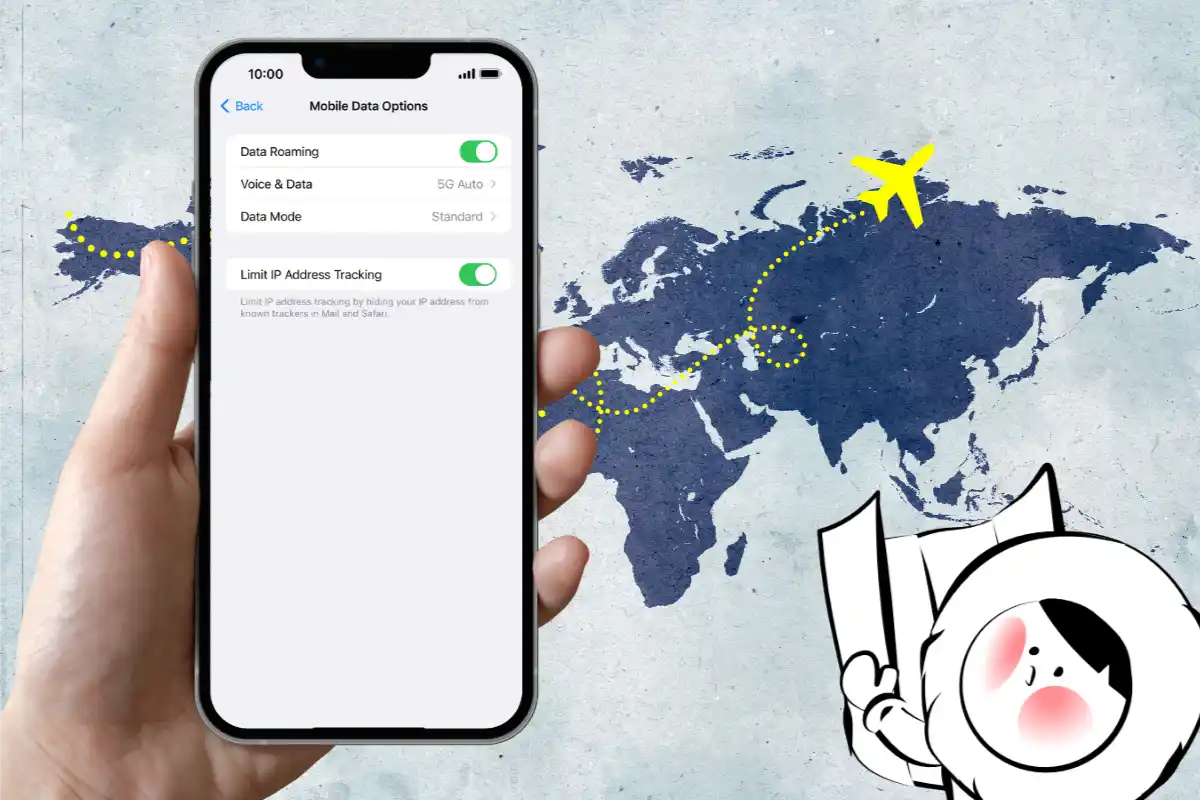
If your eSIM isn’t connecting after installation, first ensure you’ve enabled data roaming for your eSIM line. This sounds counterintuitive, but eSIMs require data roaming to be active to connect to local networks. Check your phone’s cellular settings and toggle data roaming on for your eSIM plan.
Sometimes manually selecting a network resolves connectivity issues. In your phone’s cellular settings, you can switch from automatic network selection to manual. This displays available networks in your area. Try selecting different options to find one that provides the best connection.
Restarting your phone often resolves mysterious connectivity issues. The simple act of powering off and back on can reset network connections and clear temporary glitches. Don’t underestimate this basic troubleshooting step.
If you’re experiencing slow data speeds, check whether you’re in an area with high network congestion. Urban areas during peak hours often see reduced speeds. If possible, wait for off-peak times or move to a different location with better coverage.
Running out of data doesn’t mean you’re stranded. You can purchase additional data through the Airalo app even while traveling. The process is the same as your initial purchase, and the additional data activates quickly, usually within minutes.
For persistent issues, Airalo offers customer support through their app and website. Their support team can help troubleshoot connection problems, verify your plan status, and assist with any technical difficulties.
Making the Most of Your Connected African Experience
With reliable connectivity through your eSIM, you can enhance your African adventure in ways that weren’t possible for previous generations of travelers. Use your connection to enrich your experience rather than distract from it.
Share your journey in real-time with friends and family. Post photos to social media, share stories via WhatsApp, or start a travel blog. The ability to communicate your experiences as they happen creates engagement and allows loved ones to feel connected to your adventure.
Use translation apps to engage more deeply with local cultures. Don’t let language barriers prevent you from having meaningful conversations with people you meet. Apps bridge these gaps and open doors to authentic cultural exchanges.
Research and adjust your plans on the fly. If you hear about an amazing festival, unexpected wildlife sighting, or hidden gem from fellow travelers, you can quickly research and incorporate these discoveries into your itinerary. Flexibility becomes easier when you can access information instantly.
Stay informed about local conditions and safety. Monitor weather forecasts, check for any travel advisories, and stay updated on local events that might affect your plans. Connectivity provides a safety net that helps you make informed decisions.
Navigate confidently through unfamiliar places. Whether you’re finding your way through a medina’s labyrinthine streets, locating a recommended restaurant, or driving through a national park, GPS navigation removes stress and uncertainty from the equation.

The evolution of eSIM technology has revolutionized connectivity for travelers exploring Africa. Gone are the days of expensive roaming charges, hunting for SIM card vendors in each new country, or struggling with language barriers to activate service. With a simple eSIM from Airalo, you gain reliable, affordable connectivity that spans the continent.
The convenience of setting everything up before you depart, the flexibility of maintaining your home number while using local data rates, and the seamless operation across multiple countries makes eSIM technology the clear choice for modern African adventures. Whether you’re embarking on a two-week safari, a month-long backpacking journey, or a business trip across multiple African capitals, an eSIM provides the connectivity foundation for a successful trip.
Remember that while staying connected is valuable, don’t let your phone dominate your African experience. Use connectivity as a tool to enhance your journey, stay safe, and share your adventures, but also embrace moments of digital disconnection. Some of the most profound travel experiences happen when we put our devices away and fully immerse ourselves in the present moment.
With the right preparation, a reliable eSIM plan, and the tips outlined in this guide, you’re ready to stay connected throughout your African adventure. Safe travels, and enjoy every moment of your incredible journey across this diverse and magnificent continent!